
It is one of the most searched questions among new dog owners, and one of the hardest to answer honestly. The truth is that "how long" depends on more variables than most articles acknowledge: your dog's age, breed, training history, health, and personality all factor in.
Here is an honest, vet-informed breakdown of what science actually says, and what you can do to make alone time easier on your dog.
The general rule (and why it's only a starting point) Most veterinary behaviorists agree on these baselines:
- Puppies under 6 months: 1 to 2 hours maximum
- Puppies 6 to 12 months: 3 to 4 hours
- Adult dogs (1 to 7 years): 6 to 8 hours, with breaks if possible
- Senior dogs (8+ years): 4 to 6 hours, depending on health
These are starting points, not commandments. A well-trained 3-year-old Lab might be fine for 9 hours. An anxious 4-year-old terrier might struggle past 3. Knowing your dog matters more than knowing the chart.
Signs your dog is not coping well alone Even if your dog is not barking the whole time, struggle leaves clues. Watch for:
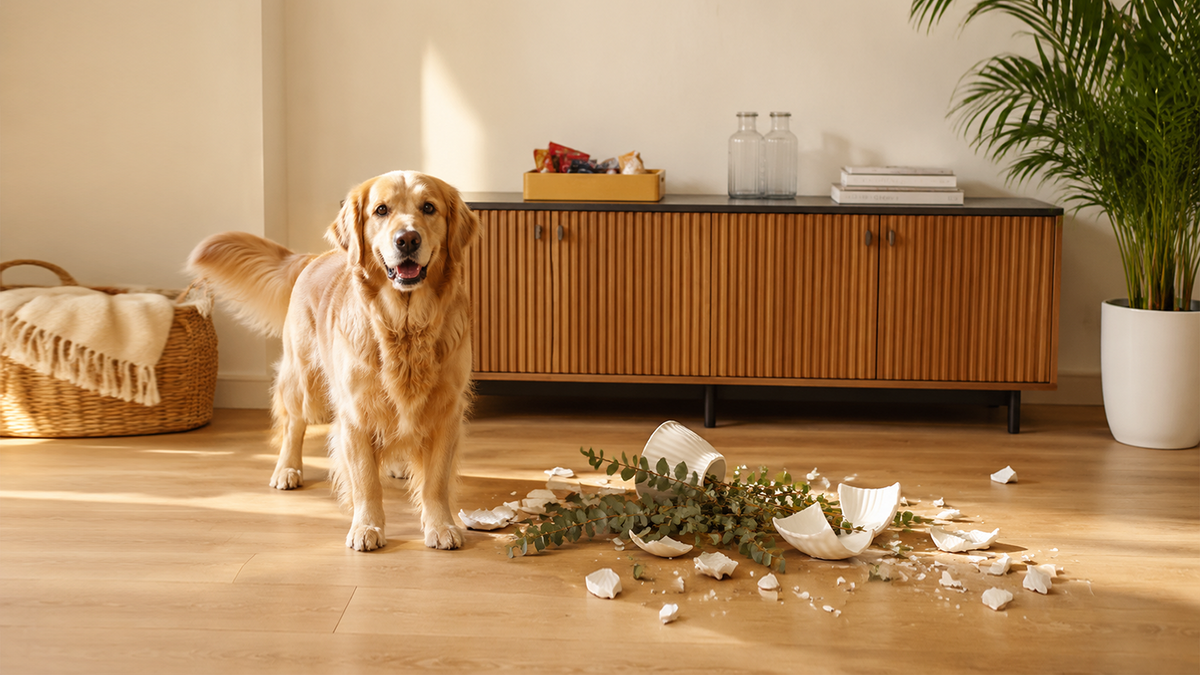
- Destructive behavior in the same spots (chewing door frames, ripping cushions)
- Inappropriate urination in adult, house-trained dogs
- Excessive panting or pacing visible on a pet camera
- Loss of appetite or eating only in the evening
- Greeting you with frantic, overwhelmed energy rather than calm joy
If you see two or more of these consistently, your current alone-time setup needs adjusting. This does not necessarily mean your dog has separation anxiety, but it does mean they are under-engaged.
What you can do to make alone time easier
Build a predictable routine. Dogs find comfort in patterns. Same walk time. Same departure ritual. Same return greeting. Predictability lowers cortisol and helps them settle.
Mental work tires faster than physical. A 30-minute sniff walk does more for an anxious dog than a 60-minute power walk. Puzzle feeders, snuffle mats, and lick mats engage the brain in ways that calm rather than stimulate.
Leave background noise that mimics presence. Talk radio, soft podcasts, or calming dog playlists can reduce the silence of an empty house. It will not fool a dog, but it does soften the contrast.
Use cameras and active engagement tools. Watching your dog on a camera is good. Interacting with them during the day is better. Treat-dispensing cameras and active pet care robots can offer short bursts of engagement throughout your absence. Even a 90-second session mid-afternoon can break up the long stretch.
Do not make goodbyes or hellos a big event. Calm departures and calm returns teach your dog that absence is not a crisis. Save the enthusiasm for a few minutes after you arrive home, once they have already settled.
When to consider extra help If your dog cannot be left alone for more than an hour without distress, you may be dealing with separation anxiety, which is a clinical condition and not the same as being bored. Talk to your vet, and consider a certified behavior consultant. Tools help, but training is what changes things long-term.
The real answer to "how long?" The honest answer is: as long as your dog can be alone without distress. For most adult dogs in a stable routine with adequate stimulation, that is 6 to 8 hours. For others, it is much less.
Pay attention to the patterns in your home. Use the tools available to you, from cameras and feeders to interactive play robots. And remember, the goal is not to maximize alone time. The goal is to make the alone time good time, not just endured time.
Your dog is not asking for less time alone. They are asking for time alone to feel less lonely.
Share:
5 Signs Your Indoor Cat Is Bored (And How to Fix It)
Active vs Passive: The Real Science of Pet Enrichment