
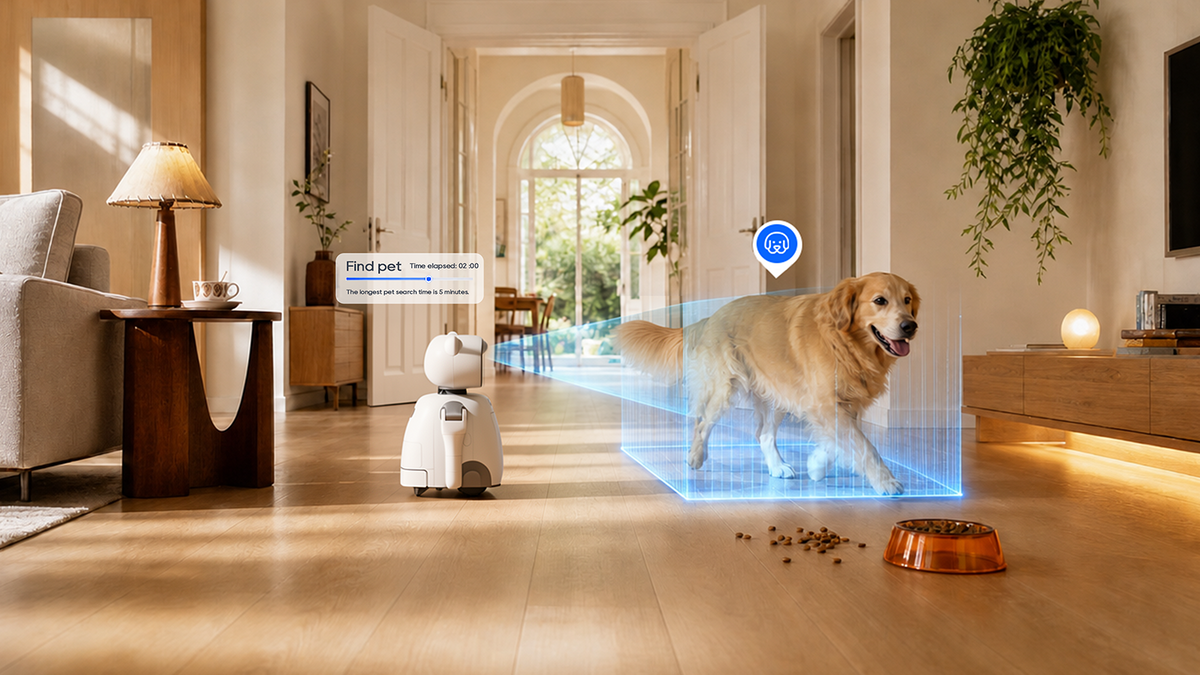
The pet tech industry has spent the last decade building tools to watch our pets. HD cameras. Two-way audio. Smart feeders. Motion alerts. And while these tools tell us more than we ever knew before, they share one limitation: they are passive.
Passive technology tells us what happened. Active engagement changes what happens.
This distinction matters more than most pet parents realize. And the science of pet enrichment makes the case clearly.
What pet enrichment actually means Enrichment is a term borrowed from zoo biology, where researchers spent decades studying how environments affect animal wellbeing. The findings translated directly to domestic pets. There are five recognized categories of enrichment:
- Sensory (sights, sounds, smells that engage senses)
- Social (interaction with humans or other animals)
- Cognitive (problem-solving, novel challenges)
- Physical (movement, exercise, climbing)
- Food-based (varied feeding, hunting simulation)
Pets need all five. The challenge is delivering them when you are not home.
The science of why watching isn't enough A 2021 study from the University of Lincoln examined cats living in single-pet, single-owner households where the owner worked outside the home. The findings were striking. Cats with access only to passive enrichment (windows, perches, static toys) showed measurable increases in stress biomarkers compared to cats with rotating interactive enrichment.
Similar studies in dogs have produced parallel findings. Passive observation has its uses for the human (peace of mind, behavior tracking) but minimal benefit for the pet. The brain needs to be activated, not just occupied.
What active engagement actually looks like Active engagement means something is happening to your pet, with your pet, regardless of whether you are holding the leash or the laser pointer. The defining traits:
- It moves or changes in unpredictable ways (predictability kills engagement)
- It rewards effort with something the pet finds rewarding (food, play, novelty)
- It mimics natural behaviors (hunting, chasing, exploring, foraging)
- It happens at varied times, not just when the human arrives home
This is why a motorized toy that runs for ten minutes can do more for a cat's day than three hours of watching pigeons through a window. Movement creates the opportunity for action. Action creates engagement.
The role of technology Pet technology has finally started crossing the line from passive to active. AI-driven play robots, mobile feeders that turn meals into chases, and behavior-aware systems that initiate engagement based on activity levels are reshaping what is possible.
The shift is significant. A camera tells you your cat slept 16 hours yesterday. An active system makes sure they do not sleep 16 hours today.
Building a daily enrichment routine You do not need expensive technology to start, though it helps fill the gaps. The principles are simple:
- Morning: short, structured play session before breakfast
- Midday (the hardest gap): some form of active engagement during your absence, whether automated or via a pet sitter
- Evening: shared activity, sniff walks, training games, cuddles
- Rotation: change the toys, the routes, the puzzles weekly
The dose matters less than the consistency. A predictable rhythm of engagement does more than occasional bursts of intensity.
The honest takeaway Watching your pet is good. Active engagement is better. The two work best together: cameras give you visibility, active tools give your pet a day worth filming.
If you have ever finished a long workday feeling guilty about how your pet spent theirs, the answer is not a sharper camera. It is a fuller day, designed in advance, delivered while you are away.
The best gift you can give a pet is not your watchful eye. It is their own engaged, enriched, well-spent day.
Share:
How Long Can You Leave Your Dog Alone? A Pet Parent's Honest Guide